
Poker Strategy Article
The Ultimate Poker Glossary: 50+ Terms Every Beginner Should Know
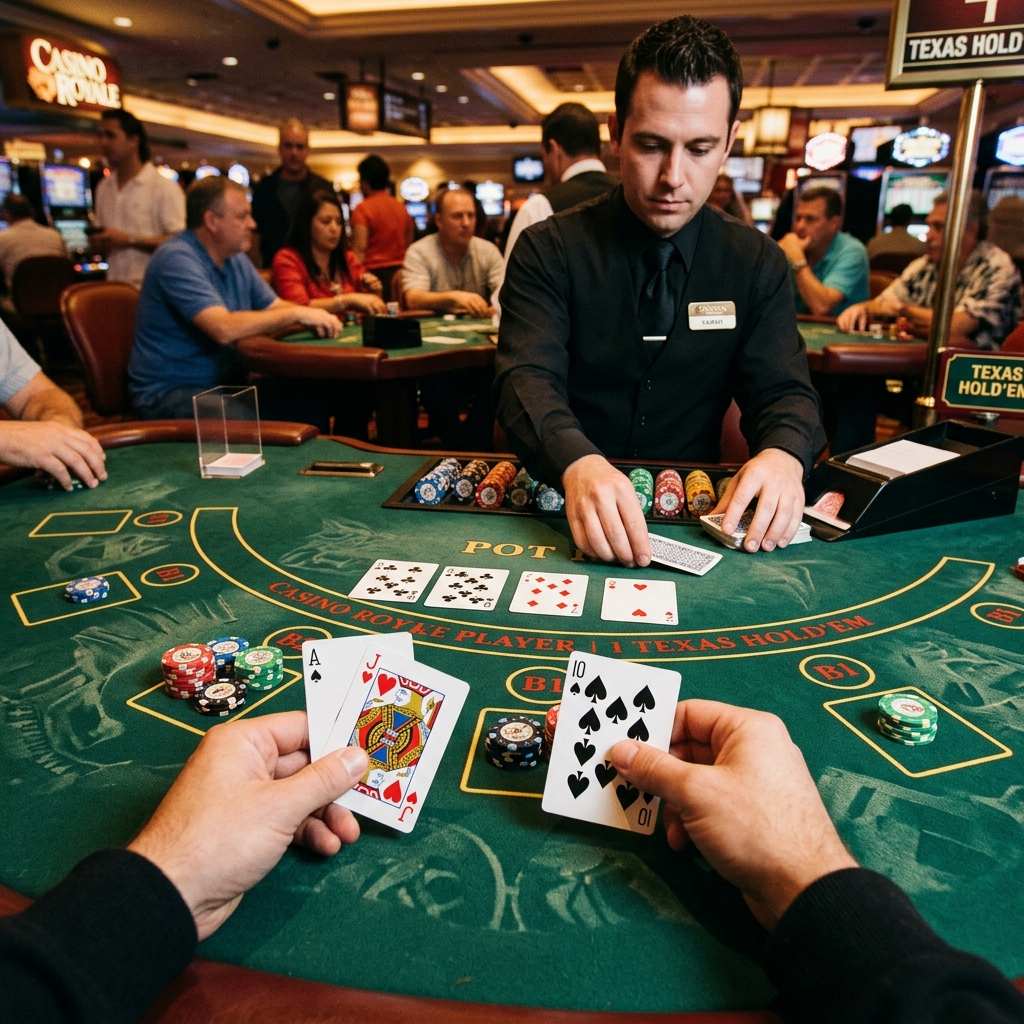
When you first sit down at a poker table, whether online or in a live casino, it can feel like everyone around you is speaking a completely different language. The dealer announces a "straddle," the player to your right talks about their "c-bet" getting "check-raised," and someone at the end of the table complains about a "bad beat" on the "river." If you do not understand the basic poker terminology, you are already at a massive disadvantage before the cards are even dealt.
This ultimate dictionary-style post is designed to bridge that gap. We have compiled over 50 of the most critical terms that every poker beginner needs to memorize. Think of each definition below as a mini-landing page for that specific concept. By mastering this vocabulary, you will be able to follow strategy discussions, understand training materials, and make cleaner decisions at the table.
- 1. What is a 3-bet?
- A 3-bet is the third bet in a poker betting sequence, most commonly used during the pre-flop action. If the big blind is considered the first bet (the forced blind), and another player raises it (the 2-bet), the next player who re-raises that amount is making a 3-bet. It is a powerful aggressive move used either to build a large pot for value with premium hands or as a bluff to force opponents to fold their marginal holdings.
- 2. Action
- This term has two meanings. First, it refers to whose turn it is to act in the current hand (e.g., "The action is on you"). Second, it refers to a game that features a high volume of betting, raising, and large pots. A table with "good action" is generally highly profitable for skilled players.
- 3. All-in
- The exhilarating and terrifying act of putting all your remaining chips into the center of the pot. Once you are all-in, you can no longer take any further betting actions in the hand, and your cards will eventually be turned face up at the showdown to determine the winner.
- 4. Ante
- A small, forced bet collected from every single player at the table before the cards are even dealt. Antes are common in the later stages of tournaments and serve to increase the size of the initial pot, which encourages players to fight for the dead money and speeds up the game.
- 5. Backdoor
- A drawing hand that requires hitting the right cards on both the turn and the river to complete. For example, if you have three hearts on the flop, you need a heart on the turn and a heart on the river to make your flush. This is also commonly known as a "runner-runner" draw.
- 6. Bad Beat
- A situation where a heavily mathematically favored hand loses to an opponent who hits a statistically unlikely draw on the later streets. Experiencing a bad beat is a frustrating rite of passage for every poker player, but it is a necessary part of the game's variance.
- 7. Bankroll
- The total, dedicated sum of money a player has set aside strictly for playing poker. Proper bankroll management is the single most important skill for long-term survival in the game, as it protects you from the inevitable downswings and variance of playing.
- 8. Blank
- A community card (usually dealt on the turn or river) that does not appear to change the relative strength of any player's hand. For example, a two of spades on a board that already has three high cards and a completed flush draw is typically considered a blank.
- 9. Bluff
- The deceptive act of betting or raising with a mathematically weak hand, with the sole intention of making your opponents fold stronger hands. Effective bluffing requires a deep understanding of board textures, opponent tendencies, and fold equity.
- 10. Board
- The collective term for the five community cards dealt face up in the center of the table (the flop, turn, and river) that all active players share to construct their best five-card poker hand.
- 11. Broadway
- The highest possible straight in poker, consisting of Ten, Jack, Queen, King, and Ace. The term can also refer generically to any single high card from Ten up to Ace.
- Also known as the dealer button, this is a physical disk that rotates around the table to indicate the nominal dealer for the hand. More importantly, the player on the button acts last on every post-flop betting round, making it the most mathematically advantageous position in the game.
- 13. C-bet meaning (Continuation Bet)
- A continuation bet, or c-bet, is a bet made on the flop by the player who was the last aggressive raiser pre-flop. By betting again, this player is "continuing" the story that they hold a strong premium hand, applying pressure to opponents to fold if they missed the flop entirely.
- 14. Calling Station
- A derogatory but widely used term for a passive, unskilled player who frequently calls bets and raises but rarely initiates aggression themselves. The best strategy against a calling station is to never bluff them and exclusively bet for value.
- 15. Check
- To pass the action to the next player without putting any additional chips into the pot. You can only check if no one else has bet before you in the current betting round. If someone bets after you check, you must then decide to call, fold, or raise.
- 16. Check-Raise
- A deceptive and aggressive two-part play where a player initially checks when it is their turn to act, waiting for an opponent to bet, and then immediately raises that bet. It is often used to trap an opponent when holding a monster hand.
- 17. Cold Call
- Calling a raise (and potentially a previous bet) when you have not already invested any money in the pot during that specific betting round. Cold calling usually indicates a moderately strong hand, but doing it too often is a hallmark of weak, passive play.
- 18. Connectors
- Starting hole cards that are consecutive in rank, such as 8-9, 10-J, or 5-6. These hands are valuable because they have a high potential to make straights. If they are also the same suit, they are called "suited connectors."
- 19. Cutoff
- The table position immediately to the right of the dealer button. It is the second-best position at the table and an excellent spot to attempt to steal the blinds if the action folds to you.
- 20. Donkey (or Donk)
- A table slang term for a very weak, inexperienced, or irrational player who makes fundamental mathematical errors. A "donk bet" is a related term referring to an out-of-position bet made into the previous street's aggressor.
- 21. Draw
- A situation where you are playing a hand that is not yet complete or currently winning, but has the potential to improve significantly with future community cards. Common examples include flush draws (needing one more card of a suit) and straight draws.
- 22. Dry Board
- A texture of community cards on the flop that does not offer many drawing possibilities or obvious connections. An example would be K-8-2 of three different suits. Dry boards are difficult to connect with, making continuation betting highly effective.
- 23. Equity
- Your mathematical, percentage-based share of the pot based on your probability of winning the hand at that specific moment. If the pot is $100 and you have a 40% chance to win, your current equity in the hand is $40.
- 24. EV (Expected Value)
- The average mathematical outcome of a specific poker decision over the long run. Making plays with a positive Expected Value (+EV) guarantees long-term profit, while making plays with a negative Expected Value (-EV) guarantees long-term losses, regardless of short-term luck.
- 25. Flop
- The pivotal moment in Texas Hold'em and Omaha where the first three community cards are dealt face up simultaneously. The flop defines the texture of the hand and dictates the majority of post-flop strategy.
- 26. Fold
- The act of surrendering your hole cards to the dealer, thereby giving up any claim to the pot. Folding costs you nothing but immediately ends your participation in the current hand.
- 27. Fold Equity
- The additional mathematical value you gain in a hand based entirely on the likelihood that your aggressive bet or raise will force your opponent to fold. Maximizing fold equity is the core mechanic behind successful bluffing.
- 28. Grinder
- A dedicated player who treats poker like a job, playing a tight, disciplined, mathematically sound game. Grinders aim to make a steady, consistent profit over thousands of hands rather than seeking massive, high-variance swings.
- 29. Gutshot
- Also known as an "inside straight draw," this is a draw where you need exactly one specific card rank to fall in the middle of your sequence to complete a straight. For example, holding 5-6-8-9 means you need exactly a 7 to hit your gutshot.
- 30. Hero Call
- The dramatic and risky act of calling a massive bet on the river with a relatively weak or marginal hand, purely because your analysis strongly suggests the opponent is executing a massive bluff.
- 31. ICM poker definition
- ICM stands for Independent Chip Model. It is a complex mathematical model used exclusively in poker tournaments to assign a real-dollar value to a player's tournament chip stack. ICM dictates that chips lost are worth more than chips gained, heavily influencing strategy near the final table.
- 32. Implied Odds
- An extension of standard pot odds. Implied odds represent the calculation of future chips you expect to extract from your opponent on later betting rounds if you successfully hit your drawing hand. High implied odds justify calling bets with speculative hands.
- 33. Limp
- Entering the pre-flop pot by passively calling the minimum big blind rather than raising. Limping is generally considered a weak play because it gives up the initiative and allows the blinds to see a flop cheaply.
- 34. Loose
- A playstyle characterized by entering many pots and playing a wide, varied range of starting hands. Loose players generate a lot of action but are highly susceptible to being trapped by tighter, more disciplined opponents.
- 35. Maniac
- An extreme player archetype characterized by hyper-aggressive betting, relentless raising, and wild bluffs with total disregard for standard mathematical principles. They create massive variance but are highly profitable to play against if you remain patient.
- 36. Muck
- To toss your losing or unplayed cards face down toward the dealer without revealing them to the rest of the table. Mucking keeps your specific holding a secret, denying your opponents valuable information about your playstyle.
- 37. Nit
- A highly conservative, overly tight player who refuses to take risks and only enters pots when holding absolute premium starting hands like Aces or Kings. Nits are easy to bluff but highly dangerous when they start betting aggressively.
- 38. Nuts
- The absolute best possible, unbeatable hand given the current community cards on the board. Holding "the nuts" means you cannot mathematically lose the hand, allowing you to bet aggressively for maximum value.
- 39. Offsuit
- Starting hole cards that consist of two entirely different suits (e.g., the Ace of Spades and the King of Hearts). Offsuit hands are statistically weaker than their suited counterparts because they are much less likely to make a flush.
- 40. Outs
- The specific, unseen cards remaining in the deck that will improve your current holding to a winning hand. Counting your outs accurately is the fundamental basis for determining whether calling a bet is mathematically profitable.
- 41. Over-blind
- A situation where a player posts a blind that is substantially larger than the required standard big blind, such as a straddle. It creates a larger pre-flop pot and essentially changes the effective stakes of the game for that specific hand.
- 42. Overcard
- A hole card in your hand that is higher in rank than any community card currently displayed on the board. For example, if you hold Ace-King and the flop is J-7-2, you have two overcards.
- 43. Overpair
- A pocket pair dealt to you in your hole cards that is higher in rank than the highest community card on the board. Holding pocket Aces on a 10-6-3 flop means you hold a massive overpair.
- 44. Pocket Pair
- Being dealt two cards of the exact same rank as your private starting hole cards, such as two Nines or two Aces. Pocket pairs have immediate showdown value and high potential to hit a powerful three-of-a-kind.
- 45. Position
- Your physical seating order relative to the dealer button, which dictates when you act during the betting rounds. Acting last (being "in position") is a tremendous tactical advantage because you get to see what everyone else does before making your decision.
- 46. Pot Odds
- The crucial mathematical ratio comparing the current total size of the pot to the cost of a contemplated call. If the pot is $100 and it costs you $20 to call, your pot odds are 5-to-1. You compare this ratio to your chances of hitting your outs to make +EV decisions.
- 47. Rainbow
- A flop texture consisting of three completely different suits, effectively eliminating the immediate threat of a completed flush. A turn or river card that does not complete a potential flush draw is also sometimes called a rainbow card.
- 48. Rake
- The small fee, percentage, or hourly charge taken by the casino, card room, or online platform for hosting the poker game. Overcoming the rake is the first mathematical hurdle a player must cross to become truly profitable.
- 49. Range
- A fundamental concept in modern poker strategy. Instead of trying to guess the two exact cards an opponent holds, skilled players assign them a "range"—a spectrum of all logical hands they could possibly have based on their betting actions.
- 50. River
- The fifth and absolute final community card dealt face up on the board. The river solidifies the final strength of all hands, triggering the last and most critical round of betting before the showdown.
- 51. Runner-Runner
- A lucky, low-probability scenario where a player hits the exact two running cards they desperately need on both the turn and the river to complete a massive hand, often resulting in a painful bad beat for their opponent.
- 52. Set
- A hidden, highly deceptive three-of-a-kind constructed using a pocket pair from your hole cards combined with one matching community card on the board. Sets are incredibly powerful because they are nearly invisible to opponents.
- A highly skilled, experienced, and consistently winning professional poker player who systematically preys upon weaker, less experienced players at the table.
- 54. Showdown
- The dramatic final phase of a poker hand, occurring after the river betting is completely finished. All remaining active players flip their hole cards face up, and the dealer awards the pot to the best five-card hand.
- 55. Splash the Pot
- The frowned-upon etiquette violation of tossing chips haphazardly into the center of the pot rather than placing them in a neat, countable stack. It makes it difficult for the dealer and players to verify the bet amount.
- 56. Squeeze
- A powerful pre-flop betting tactic where a player executes a large re-raise after there has already been an initial raise and one or more callers. The goal is to apply maximum pressure and "squeeze" the callers out of the pot to isolate the original raiser.
- 57. Suited
- Starting hole cards that share the exact same suit (e.g., the Jack of Diamonds and the Nine of Diamonds). Suited hands carry a slight statistical premium over offsuit hands because they have a much higher likelihood of hitting a flush.
- 58. Tell
- A physical, subconscious mannerism, betting pattern, or verbal tic that inadvertently reveals the strength or weakness of a player's hand. Identifying tells is a key skill in live poker, though less relevant online.
- 59. Tilt
- A dangerous emotional state where a player becomes frustrated, angry, or desperate, usually following a bad beat. A tilting player abandons logical strategy and makes highly irrational, aggressive, and costly decisions.
- 60. Turn
- The fourth community card dealt face up on the board. The turn often dramatically shifts the equities in the hand, completing draws or creating new threats before the final betting round.
- 61. Under the Gun (UTG)
- The highly vulnerable seating position immediately to the left of the big blind. The UTG player must act absolutely first during the pre-flop betting round, requiring them to play a very tight, premium range of starting hands.
- 62. Value Bet
- A fundamentally sound bet made when holding a hand you believe to be the best, specifically sized to extract the maximum amount of chips from opponents holding weaker, secondary hands who are willing to call.
- 63. Variance
- The mathematical reality of statistical deviation in poker. Variance represents the short-term upswings and downswings in a player's bankroll caused by sheer luck, which obscures the player's true long-term skill edge.
- 64. Wet Board
- A dangerous community card texture offering a multitude of highly coordinated drawing possibilities. For example, a flop of 9-10-Jack all of spades is incredibly "wet," meaning it is highly likely an opponent has hit a massive draw or a made hand.
- 65. Wheel
- The specific nickname for the lowest possible straight in poker: Ace, Two, Three, Four, and Five. In lowball games, the wheel is the absolute best possible hand (the nuts).
By studying and mastering these definitions, you will not just sound like a seasoned player; you will begin to think like one. Understanding the difference between a value bet and a bluff, or recognizing when you have fold equity versus when you are facing a calling station, forms the absolute bedrock of a profitable poker strategy. Bookmark this page, review these terms often, and keep refining your game.